 Skip to content
The Unharvested Strip: How Farmers Are Leaving a Lifeline for Wildlife
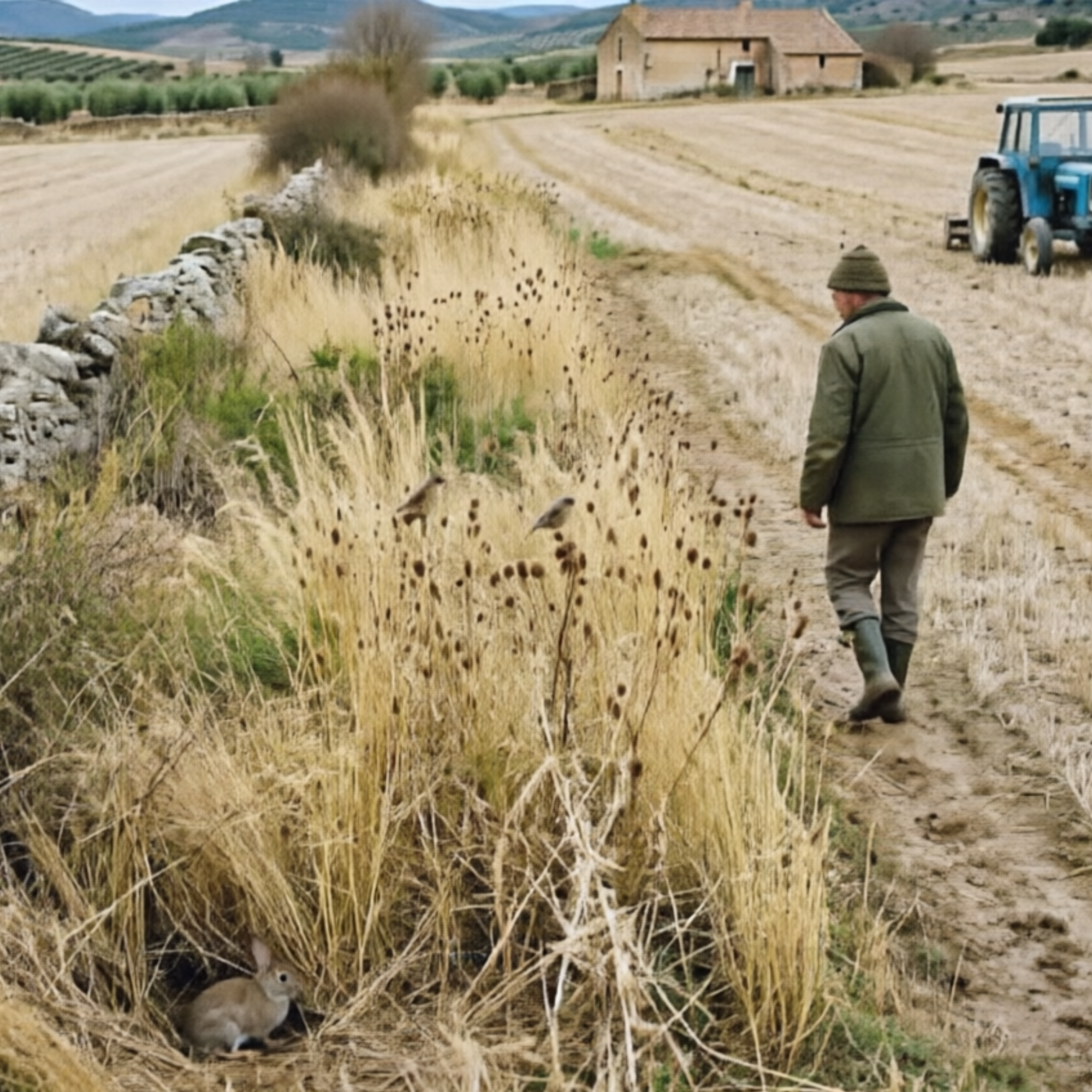
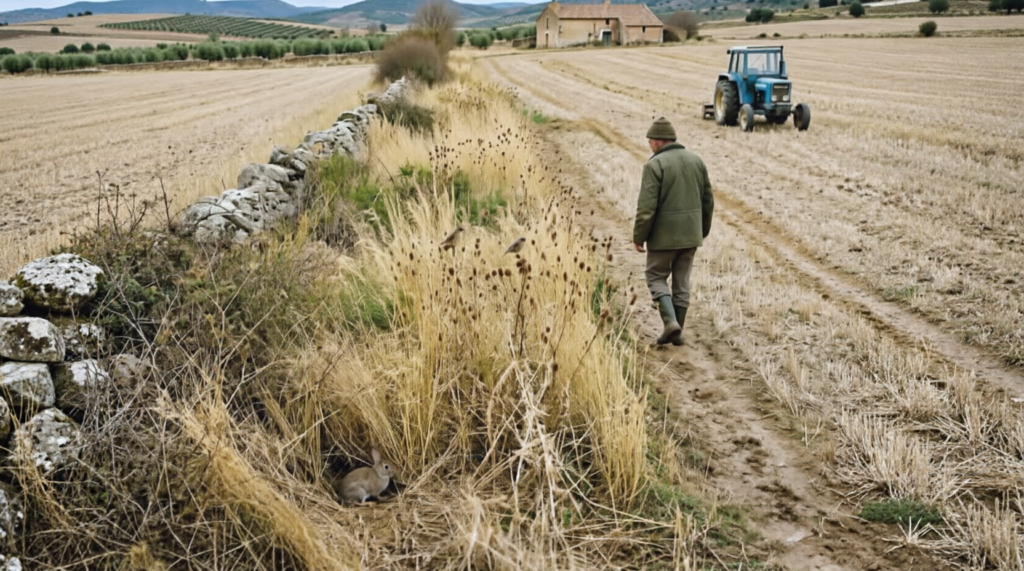
Picture a vast, golden agricultural field in the rolling countryside of Spain. The harvest is complete. The heavy machinery has done its work, leaving behind neat rows of cut stalks and bare earth. A farmer walks down the dirt track, his tractor parked in the distance, surveying his land. But if you look closely at the edges of the field, near the ancient, moss-covered stone walls, you’ll notice something different.
There is a thick, unharvested strip of tall, golden grass and wild plants. Hidden within this dense patch of vegetation is a small rabbit, and perched on the stalks above are a few small birds.
This isn’t an accident, and it isn’t laziness. This is a deliberate, beautiful act of conservation. As the text on the viral image of this scene explains: “In Spain, some farmers leave part of their fields after harvest… because what remains may be a lifeline for wildlife during winter!”
This simple practice is a shining example of how agriculture and nature can coexist. But to understand why this is so important, we first need to understand the silent crisis facing wildlife in our modern world.
The Winter Starvation Trap
For centuries, farming and wildlife evolved together. Fields were smaller, harvests were less efficient, and there was always plenty of “spillage”—grains left behind for birds, and thick hedges for animals to hide in.
However, the advent of modern, intensive agriculture changed everything. Today’s farming is incredibly efficient. Massive combine harvesters can clear hundreds of acres in a matter of hours, leaving the ground completely bare. While this is great for maximizing crop yield and feeding a growing human population, it creates a devastating “green desert” for local wildlife.
When winter arrives, the challenges for small animals multiply. The temperatures drop, shelter becomes scarce, and food sources vanish. For species like partridges, larks, hares, and rabbits, a completely harvested field is a death sentence. Without the cover of tall grass to hide from predators like foxes and birds of prey, and without the leftover seeds and grains to eat, winter mortality rates skyrocket.
A Simple Solution with a Massive Impact
This is where the Spanish farmers come in. By intentionally leaving strips of crops unharvested—often along the margins of fields, near stone walls, or in awkward corners where machinery is hard to maneuver—they are creating a vital sanctuary.
These unharvested strips, sometimes called “buffer strips” or “wildlife corridors,” serve two critical functions:
- The Pantry: The leftover grains, seeds, and dried plants provide a crucial food source. A single strip of unharvested wheat or barley can feed a flock of finches or a family of rabbits for weeks.
- The Fortress: The tall, dense vegetation provides essential cover. It protects small mammals and ground-nesting birds from harsh winter winds, snow, and, most importantly, predators.
It is a remarkably low-cost, high-impact solution. The farmer loses a tiny fraction of their overall yield—often an amount so small it doesn’t even dent their profits—but the ecological return is enormous.
More Than Just Charity: The Ecological ROI
While leaving food for a shivering rabbit might seem like a simple act of kindness, it is also a highly practical farming strategy. Nature operates on a system of checks and balances, and biodiversity is a farmer’s best friend.
When farmers support wildlife, that wildlife supports them right back. The birds that feast on the leftover winter grains are the same birds that will spend the spring and summer eating crop-destroying insects and pests. The insects that survive the winter in the tall grasses are the vital pollinators that will ensure a healthy yield for the next harvest. Even the rabbits and small mammals help to aerate the soil and spread seeds.
By maintaining these strips of biodiversity, farmers are essentially investing in the natural pest control and pollination services of their land. It is a shift away from viewing the farm as a factory, and toward viewing it as a living, breathing ecosystem.
Reviving Traditional Wisdom
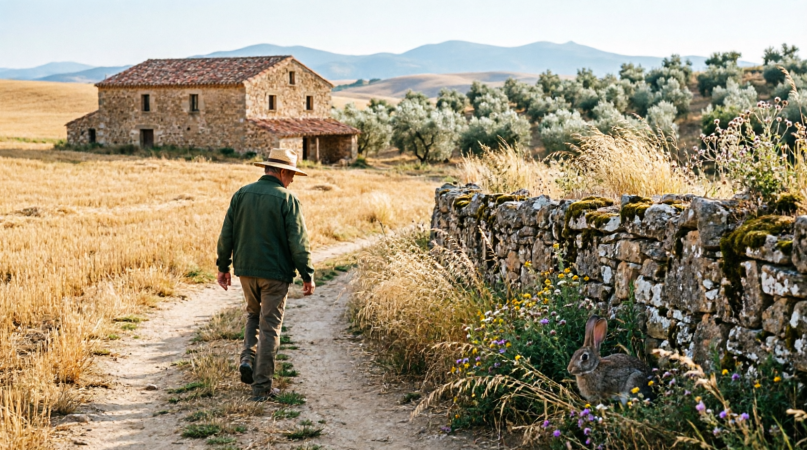
Interestingly, this practice is also a return to traditional wisdom. For generations, farmers worked with the land, not just on it. They understood that a healthy farm required a healthy environment. The dry stone walls seen in the image are a testament to this; built by hand centuries ago, they provide perfect nesting spots for birds and shelter for reptiles and insects.
Today, as the negative impacts of industrial farming—like soil degradation, water pollution, and biodiversity loss—become impossible to ignore, there is a global movement to return to these sustainable roots.
In Europe, initiatives like the European Union’s Agri-Environment Schemes actually pay farmers to implement these exact practices. They recognize that farmers are not just food producers, but also the primary stewards of the countryside. By incentivizing them to leave these “lifelines,” governments are helping to bridge the gap between food production and conservation.
How You Can Help
You might be reading this and thinking, “That’s great for farmers in Spain, but what can I do?”
The philosophy behind the unharvested strip can be applied anywhere, even in your own backyard or balcony.
- Leave the leaves: In the autumn, don’t rake up every single leaf. Leave some in the corners of your garden to provide winter shelter for insects and hedgehogs.
- Delay the cutback: If you have ornamental grasses or dried flower beds, wait until late winter or early spring to cut them back. The dried seeds will feed local birds, and the hollow stems provide crucial overwintering spots for beneficial bees and butterflies.
- Support sustainable agriculture: When you buy your food, look for labels that support biodiversity, organic farming, or regenerative agriculture. Vote with your wallet for farmers who care about the ecosystem.
Conclusion
The image of the Spanish farmer walking past the unharvested strip is a powerful reminder of our connection to the natural world. It shows that human survival and wildlife survival do not have to be a zero-sum game.
With a little bit of foresight and a willingness to leave a little bit behind, we can ensure that the countryside remains a vibrant, living place long after the harvest is done. That small patch of tall grass isn’t just leftover crops; it is a promise of life, a warm shelter, and a lifeline through the cold winter months. And that is a harvest worth celebrating.
I hope you enjoyed this article! If you found it interesting, feel free to share it with others to spread the word about sustainable farming and wildlife conservation.