 Skip to content
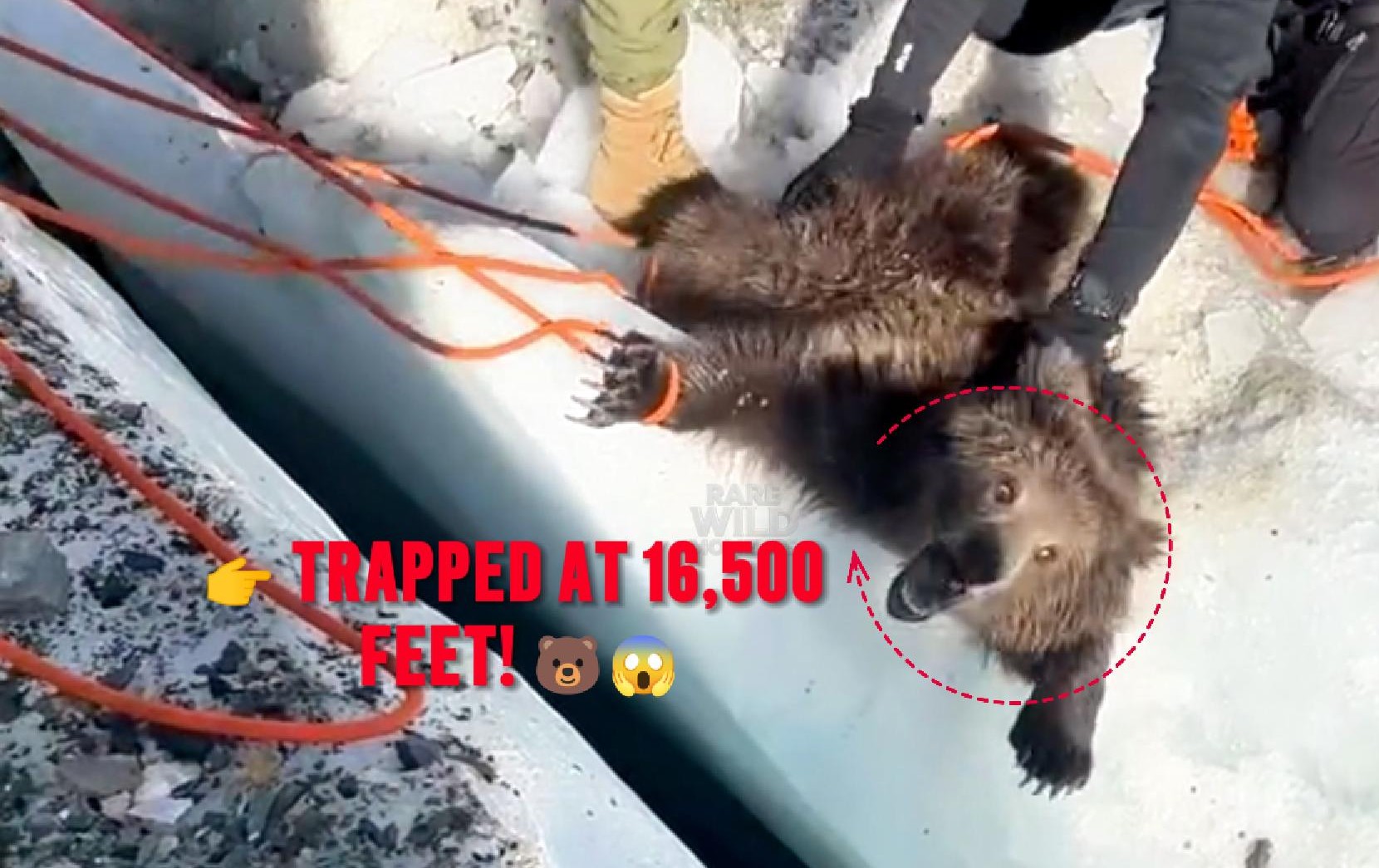
In one of the most challenging wildlife rescue situations imaginable, a young bear cub became trapped deep inside a dangerous crevasse at an altitude of approximately 16,500 feet. The remote and difficult terrain made reaching the helpless animal extremely challenging, while another major obstacle was waiting nearby: the cub’s protective mother.
The rescue required patience, careful planning, and determination. Despite the extreme conditions, the team continued working to find a safe way to reach the trapped cub and bring it back to safety.
A Baby Bear Trapped in a Dangerous Crevasse
The young bear found itself in a deep crevasse with no obvious way to escape. At such a high altitude, the environment itself presented serious challenges. Steep terrain, difficult access, cold conditions, and the depth of the crevasse made the rescue far more complicated than a typical wildlife intervention.
The cub was unable to free itself, leaving it dependent on the rescuers for help.
But reaching the cub was only part of the problem.
The Mother Bear Was Nearby
The cub’s mother remained in the surrounding area, making the situation even more delicate.
Like many wild mothers, she was protective of her young and did not want people approaching her baby. Any rescue attempt therefore had to be carried out with extreme caution.
The team needed to find a way to help the cub while minimizing stress and avoiding unnecessary danger to both the animals and the rescuers.
This meant that patience was essential.
A Rescue at 16,500 Feet
Rescuing an animal at an altitude of 16,500 feet is far from an easy task.
The high elevation, difficult terrain, and limited access can make even simple movements exhausting. The rescuers had to carefully assess the situation and determine the safest possible approach.
Rather than rushing, the team continued step by step, keeping the difficult surroundings and the nearby mother bear in mind.
Their goal was simple: reach the cub and get it out safely.
The Team Refused to Give Up
Despite the challenges, the rescue team continued their efforts.
Every part of the operation required concentration and patience. The cub’s safety was the priority, but the team also had to consider their own safety and the presence of the protective mother.
After considerable effort, they were finally able to reach the little bear and carefully bring it out of the dangerous crevasse. 🐻❤️
The moment the cub was safely out was the reward for all the difficult work.
A Second Chance for the Little Bear
For the rescuers, seeing the cub safe again must have been an unforgettable moment.
What had started as a dangerous situation had finally ended with the young bear out of the crevasse and given another chance to survive in the wild.
The rescue also highlights an important aspect of wildlife conservation: helping wild animals often requires much more than simply reaching them. Rescuers must understand the environment, respect the animals’ behavior, and carefully balance the safety of everyone involved.
A Powerful Reminder About Wildlife
This remarkable rescue is a reminder that wild animals can sometimes find themselves in dangerous situations where human intervention becomes necessary.
The little bear could not escape the crevasse alone, but the determination of the rescue team helped change the outcome.
At an extreme altitude of 16,500 feet, with difficult terrain and a protective mother nearby, successfully rescuing the cub was an incredible achievement. 🐻🏔️❤️
Most importantly, the story ends with hope: a vulnerable young animal was brought out of danger and given a second chance.
Thank God for a successful rescue. 🙏🐻❤️
Watch the Rescue
If you enjoy heartwarming wildlife rescues and incredible moments from nature, follow Rare Wild Moments for more stories of animals overcoming danger and receiving a second chance at life.
Every rescue matters. Every life counts. 🐾❤️
Note: Details such as the exact altitude and circumstances should be treated as reported unless independently verified by a reliable source.